Archive for September, 2009

We’ve got everything, yet nobody’s happy

30 September, 2009 11:51 am

Love this part of a Conan O’Brien interview with comedian Louis C.K. One quote to make you curious:

We’re living in an amazing world (with the world’s best technology) and it’s wasted on the crappiest generation of all time.

Klik voor het hele artikel… »


A PicNic in Amsterdam

23 September, 2009 9:41 am

This week I’ll be hanging out in “The Westerpark”. Not because I’m choosing a new career as a street musician or as a re-born fisherman. But because I’m attending one of the best conferences in the World: PicNic ‘09.

This 4-day conference started out under the name of “Cross Media Week”, but covers a lot more subjects than just media and creativity. I’ve been coming here for years and have blogged about it several times. Last year I even got the chance to give a talk on the main stage. This was my talk about “Virtual Happiness“, just two months before I went offline.

I’m particulary looking forward to the following speakers at PicNic’09:

Klik voor het hele artikel… »


Steve Jobs in 1 minuut en 50 seconden

18 September, 2009 7:25 pm

Zwarte coltrui, spijkerbroek en waanzinnig presentatietalent. Steve Jobs is een held op vele fronten. Zijn keynotes zijn inmiddels een format op zich. Het wachten was dus op de parodieën en de bijzondere compilaties. Hier is een ‘awesome’ versie in 1 minuut en 50 seconden.

Klik voor het hele artikel… »


Artikel in de “Gazet van Antwerpen”

14 September, 2009 7:38 pm

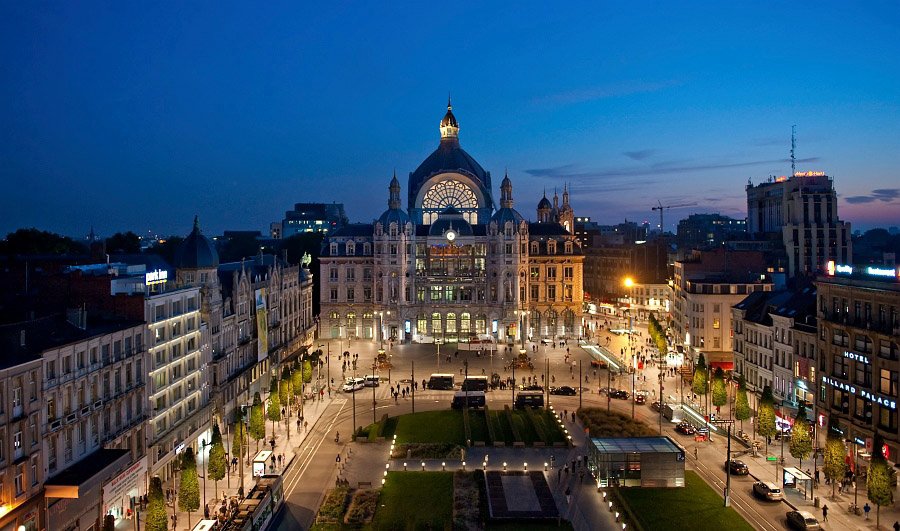
Via Willemijn Visser werd ik erop gewezen dat er in de Gazet van Antwerpen een bespreking van mijn boek was te lezen. Voor wie het interesseert (en te lui is om naar België te rijden), hier een digitale versie.

E-mail kan meer kapotmaken dan je lief is. De grootste conflicten in het bedrijfsleven zijn een gevolg van verkeerd gevallen e-mail. In zijn boek ‘Hoe overleef ik mijn inbox’ geeft de Nederlandse internetexpert Jim Stolze tips voor een gelukkig online leven. Dat internet mensen gelukkiger heeft gemaakt, staat voor hem vast.
Sommige mensen hebben er een handje van: mailtjes versturen waarin ze hun woede de vrije loop laten. Of erger: waarin ze hechte vriendschappen of relaties opzeggen. Reageer je op zulke e-mails of niet? En hoe doe je dat dan? Vanachter het toetsenbord of pak je toch maar ouderwets de telefoon? Het kan best dat de vriend in kwestie zijn mail in een opwelling verstuurde en geen spijt durft te bekennen.

Spijtknop
Daarom adviseert internetexpert Jim Stolze: zodra je emoties voelt tijdens het tikken, stop dan! “Achter het toetsenbord voelen mensen zich vaak een hele held, ze laten zich meeslepen door emoties”, verklaart hij. “Voor ze er erg in hebben, spuien ze allerlei ergernissen waarvan ze op dat moment de gevolgen niet overzien. Daarom heeft Google al een aantal jaar geleden een spijtknop geïntroduceerd. Zodra je een mailtje verstuurt, verschijnt op je scherm de vraag: weet u zeker dat u deze mail wilt verzenden?”

Want mail kan meer kapotmaken dan je lief is.

Klik voor het hele artikel… »


Kevin Kelly comes to Amsterdam

13 September, 2009 10:08 pm

PRESS RELEASE

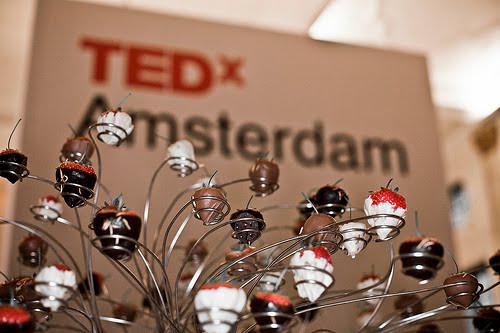
TEDxAmsterdam, to be held Nov. 20, 2009, will announce an event speaker every Tuesday, starting with Kevin Kelly, founding executive editor of Wired magazine. In his best-seller, Out of Control (1994), Kelly predicted the rise of decentralized systems and network economies, and the convergence of biology and technology — between living organisms and machines. Subsequent developments such as grid computing, biomimicry, synthetic biology, DNA-computing and artificial life confirm his insights. Kelly is also associated with The Well, Global Business Network and The LongNow Foundation.

TEDxAmsterdam will take place at the Royal Institute for the Tropics and will feature TED Talks videos, original speakers and music. In the spirit of ideas worth spreading, TEDx is a program of local, self-organized events that brings people together to share a TED-like experience. At a TEDx event, TEDTalks video and live speakers combine to spark deep discussion and connection in a small group. These local, self-organized events are branded TEDx, where x=independently organized TED event. The TED Conference provides general guidance for the TEDx program, but individual TEDx events are self-organized.

More than two thousand people applied to take part in TEDxAmsterdam. The attendees of TEDxAmsterdam “consist of a few hundred, hand-picked, opinion leaders from in and outside the Netherlands. As the committee of recommendation — former prime minister of the Netherlands Wim Kok, Hans Wijers of Akzo Nobel, KNAW director Robbert Dijkgraaf and former TED speakers Louise Fresco, Theo Jansen and Siegfried Woldhek — illustrates, the attendees will be just as extraordinary as the speakers,” says organizer Jim Stolze.

TEDxAmsterdam will be streamed live. Tickets will also be awarded to people who win special challenges, for example idea-contests. Creative individuals can also enter an video/animation competition. Submissions of a potential TEDxTalk can be sent to www.tedxamsterdam.nl. The winner will be allowed to present a five-minute speech at the event.

Klik voor het hele artikel… »


New York – New Amsterdam

8 September, 2009 7:41 pm

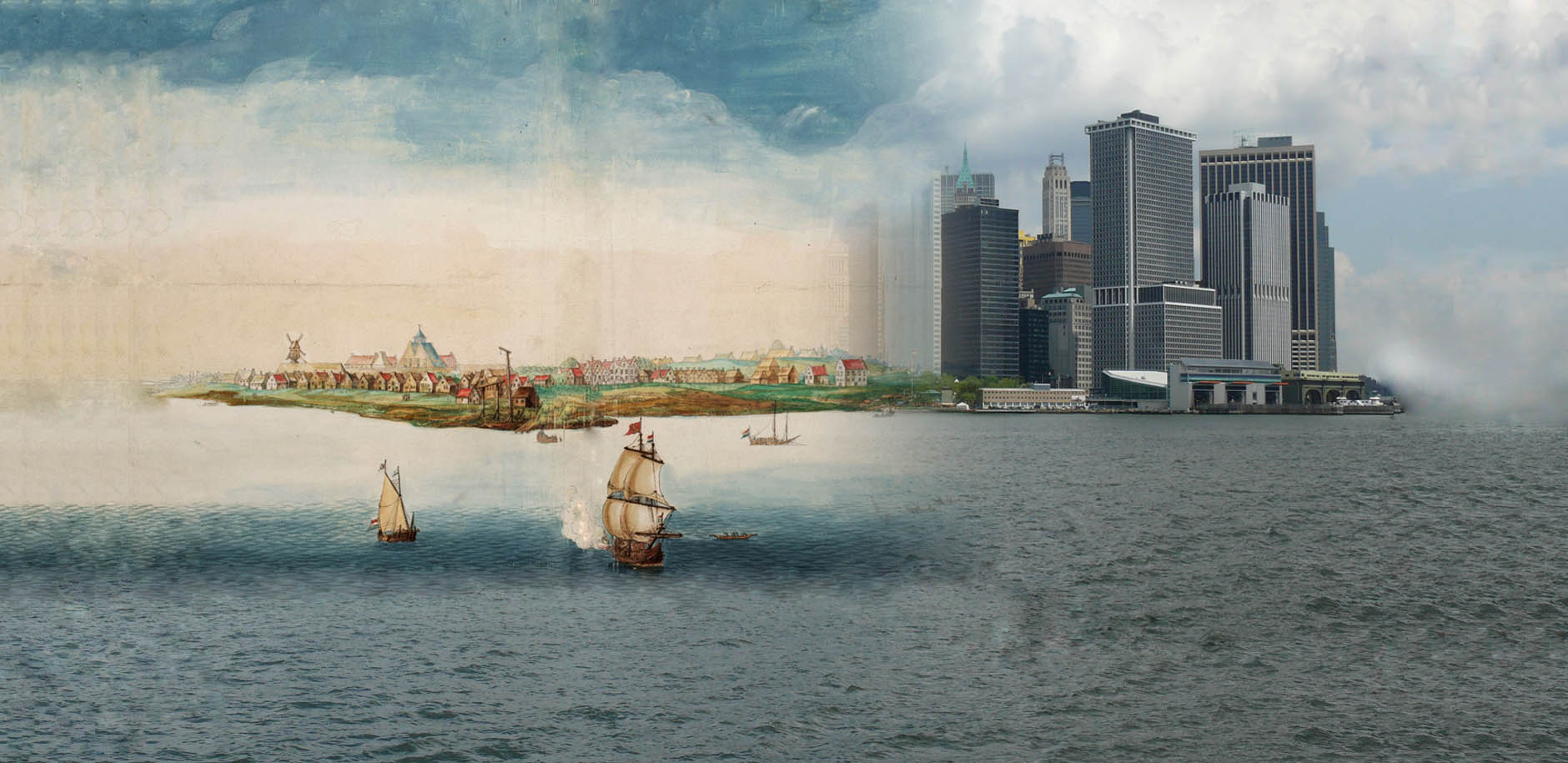
Deze hele week staat in het teken van de 400-jarige relatie tussen Nederland en New York. In september 2009 gaat het in en rondom New York om één man: Henry Hudson. Met tal van activiteiten herdenken de Amerikanen (en Nederlanders) dat 400 jaar geleden deze Engelse zeevaarder als eerste Europeaan de baai van New York binnenvoer en hiervan verslag uitbracht. Omdat Hudson onder Nederlandse vlag voer kan Nederland dit feest toevoegen aan de lijst van recente jubilea, waarvoor onze zeevarende voorouders verantwoordelijk zijn.

Zijn wij Nederlanders misschien iets teveel onszelf op de borst aan het kloppen? Dat New York zo’n fantastische stad is omdat wij er destijds iets mee vandoen hebben gehad? Dat klinkt niet echt logisch. Toch is de gedachte van een New York en een New Amsterdam een intrigerende.

Maar nog interessanter wordt het als je je indenkt hoe New York er destijds uitzag. In niets leek het op het huidige New York, laat staat het oude Amsterdam. Maar hoe zag New York er destijds dan uit? Wat zag Henry Hudson precies toen hij de baai naderde? Enter het “Mannahatta Project“, een fantastisch onderzoeksproject dat samen met “The Wildlife Conversation Society”  de oorspronkelijke staat van Manhattan heeft weten te visualiseren:

That’s right, the center of one of the world’s largest and most built-up cities was once a natural landscape of hills, valleys, forests, fields, freshwater wetlands, salt marshes, beaches, springs, ponds and streams, supporting a rich and abundant community of wildlife and sustaining people for perhaps 5000 years before Europeans arrived on the scene in 1609.

It turns out that the concrete jungle of New York City was once a vast deciduous forest, home to bears, wolves, songbirds, and salamanders, with clear, clean waters jumping with fish. In fact, with over 55 different ecological communities, Mannahatta’s biodiversity per acre rivaled that of national parks like Yellowstone, Yosemite and the Great Smoky Mountains!

Klik voor het hele artikel… »


Things that the Internet is killing

4 September, 2009 8:19 am

Many people think of the Internet as a part of nearly everything. You can’t turn on the radio without hearing a commercial that ends with “please visit WWW (anything) dot com”. It looks like the Internet has added an extra layer to our lifes.

Or, has it? Matthew More from The Telegraph wrote a fun article on 50 things that are killed by the Internet. Here are my 5 favorites:

  • Letter writing/pen pals: Email is quicker, cheaper and more convenient; receiving a handwritten letter from a friend has become a rare, even nostalgic, pleasure. As a result, formal valedictions like “Yours faithfully” are being replaced by “Best” and “Thanks”.
  • Memory: When almost any fact, no matter how obscure, can be dug up within seconds through Google and Wikipedia, there is less value attached to the “mere” storage and retrieval of knowledge. What becomes important is how you use it – the internet age rewards creativity.

  • Dead time: When was the last time you spent an hour mulling the world out a window, or rereading a favourite book? The internet’s draw on our attention is relentless and increasingly difficult to resist.
  • Delayed knowledge of sporting results: When was the last time you bought a newspaper to find out who won the match, rather than for comment and analysis? There’s no need to fall silent for James Alexander Gordon on the way home from the game when everyone in the car has an iPhone.
  • The mystery of foreign languages: Sites like Babelfish offer instant, good-enough translations of dozens of languages – but kill their beauty and rhythm.
  • Concentration: What with tabbing between Gmail, Twitter, Facebook and Google News, it’s a wonder anyone gets their work done. A disturbing trend captured by the wonderful XKCD webcomic.

Klik voor het hele artikel… »


Voeg de RSS-feed aan de gepersonaliseerde pagina van Google:
Add to Google


Voeg MarketingPodcast.nl toe via iTunes:
Add to iTunes


Wil je een bericht ontvangen als er een nieuwe aflevering is? Vul hier je e-mailadres in:

Delivered by FeedBurner